
The Complete Tea Garden Library
Swap the 2pm coffee for a cup you grew yourself
Four digital guides that take you from first seed to first cup: how to grow it, how to dry it, and how to steep it so herbal tea stops tasting like lawn clippings.
Instant digital download. Works for pots, porches and beds.
- 30 blend recipes
- 82-plant directory
- 24 plant guides
- Printables included

Instant download
Start the same day you order.
30 blends, ready to brew
Exact proportions, water temperature and steep time.
Pots, porches or beds
Written for containers first, because that is where most of us start.
Printables included
Harvest calendar, starter checklist, blend cards and more.

The bundle
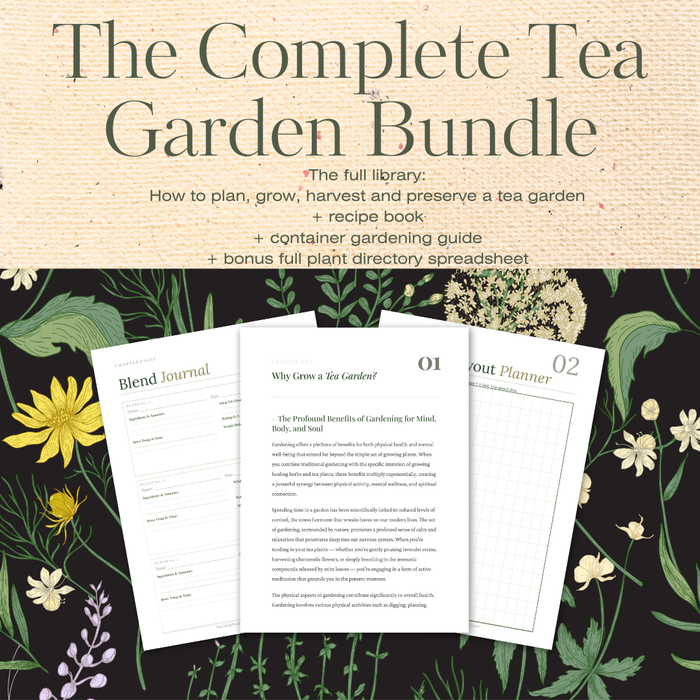
The Complete Tea Garden Library
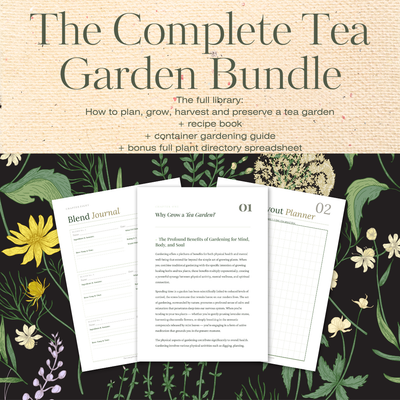
The flagship guide, the 30-blend recipe book, the container system and the plant directory. Buying them one at a time works. It just costs more.
- Growing Your Own Tea Garden: From Seed to Cup (Herbal Tea Gardening Ebook)$24
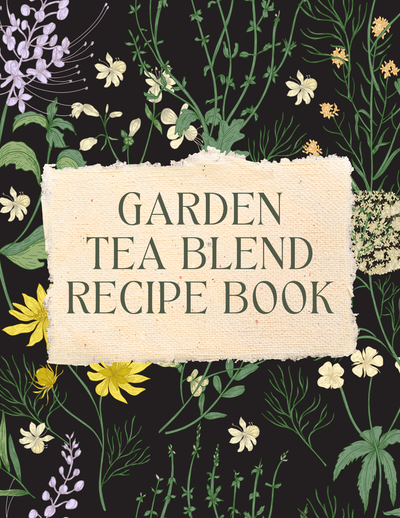
- Garden Tea Blend Recipe Book: 30 Seasonal Herbal Tea Blends From Your Own Garden (Ebook)$17
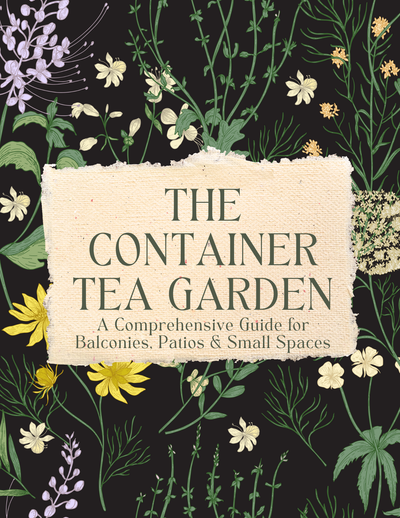
- Container Tea Garden Guide: Grow Herbal Tea on Balconies, Patios and Small Spaces (Ebook)$12
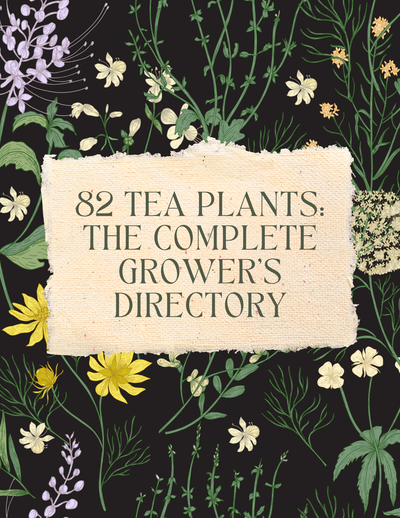
- 82 Tea Plants Growers Directory: Herbal Tea Garden Plant Spreadsheet$12
Plus printable bonuses: seasonal harvest calendar, seed starting timeline, first cup starter checklist, blend recipe cards and planner templates.
All four are instant digital downloads.
Get all four for $47What's inside
Everything between the seed and the cup
Not a coffee table book. A working library you will get dirt on.
4
Guides
The flagship growing guide, the recipe book, the container garden system and the plant directory.
30
Blend recipes
Spring to winter, wellness to celebration. Each one comes with exact proportions, water temperature and steep time.
82
Plants mapped
A sortable reference with grow zones, sun, spacing and harvest stage, so you can plan before you plant.
Shop by need
What are you steeping for?
Pick the problem. The bundle starts with the plants.
Sleep
Chamomile, lemon balm, lavender
For the nights your brain decides to reread every email you sent today.
Find your blendDigestion
Peppermint, fennel, lemon verbena
For after the second helping you knew about before you took it.
Find your blendAllergy
Nettle, peppermint, elderflower
For spring, when the garden you love is also the reason you can't breathe.
Find your blendSore throat
Sage, thyme, marshmallow root
For the scratchy day before it turns into a whole week.
Find your blendHerbal tea is lovely. It is not a replacement for your doctor.
The tea quiz
What kind of tea gardener are you?
Five questions. No wrong answers, only different plants.
Question 1 of 5
Where would your tea garden live?
Question 2 of 5
It's 10pm. What's in your mug?
Question 3 of 5
How much time can you give it in July?
Question 4 of 5
Your favorite part of a recipe is...
Question 5 of 5
Pick the problem you'd most like a cup to solve.
Your tea personality
The Night Owl
Your plants: Chamomile, lemon balm, lavender
You don't need more energy. You need your brain to stop narrating at 11pm. Your garden is a wind-down garden: soft, fragrant, and forgiving of being ignored in August.
Start with
Your tea personality
The Porch Potter
Your plants: Mint, lemon verbena, holy basil
You've got a stoop, a balcony, or one sunny windowsill and a lot of ambition. Good. Tea herbs do better in pots than people expect, because you control the soil and the water and nothing else gets a vote.
Start with
Your tea personality
The Kitchen Alchemist
Your plants: Anise hyssop, lemon verbena, calendula
You will never follow a recipe exactly and we both know it. You want flavor first, and you want to know why a blend works so you can break the rules on purpose.
Start with
Your tea personality
The Apothecary Keeper
Your plants: Echinacea, holy basil, nettle
You have a notes app full of plant names and at least one jar labeled in handwriting only you can read. You want the whole picture: how it grows, what it does, and what the research says.
Start with
Your tea personality
The Wild Tender
Your plants: Chamomile, borage, mint
You'd rather the garden did most of the work. Fair. Plants want to live. Pick the ones that come back on their own, set up the water once, and harvest on your way past.
Start with
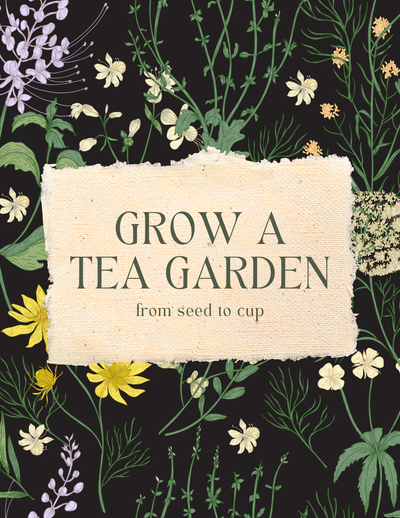
Or start with a single guide
-

Tea Garden Ebook Bundle: Growing Guide, Recipe Book, Container Gardening Guide and Plant Spreadsheet
Regular price $47.00 USDRegular price -
Growing Your Own Tea Garden: From Seed to Cup (Herbal Tea Gardening Ebook)
Regular price $24.00 USDRegular price -
Container Tea Garden Guide: Grow Herbal Tea on Balconies, Patios and Small Spaces (Ebook)
Regular price $12.00 USDRegular price -
Garden Tea Blend Recipe Book: 30 Seasonal Herbal Tea Blends From Your Own Garden (Ebook)
Regular price $17.00 USDRegular price -
82 Tea Plants Growers Directory: Herbal Tea Garden Plant Spreadsheet
Regular price $12.00 USDRegular price -
Grow Mushrooms at Home: Beginner's Guide to Indoor Gourmet Mushroom Cultivation (Ebook)
Regular price $12.00 USDRegular price


Not ready to buy anything? Fair.Start with the free tea blend journal and plant directory.
Get the free guidesBefore you buy
Fair questions
Will it taste good, or like lawn clippings?
Most bad herbal tea is a steeping problem, not a plant problem. Every blend in the recipe book comes with exact proportions, water temperature and steep time, plus a harvest note for when each ingredient is at its best. Fix the steep and the tea gets better.
I'm tired and busy. Is this a lot of work?
A tea garden can be a few pots on a sunny step. The container guide includes a day-by-day first week, from choosing your spot on day one to drinking your first homegrown cup on day six. Start with the five-minute version and add plants as you go.
Do I need a yard?
No. One of the four guides is written for balconies, patios and windowsills. It covers containers, soil mix, watering, and the eight best herbs for pots.
Can herbal tea replace my afternoon coffee?
It can take the same slot: something to make, hold and sip. It will not work like caffeine, and no herb is a drug. The guides say what each plant is traditionally used for and say so when the evidence is thin. Herbal tea is lovely. It is not a replacement for your doctor.
Why the bundle instead of just the ebook?
The flagship ebook teaches you to grow. The recipe book teaches you to blend, the container guide covers small spaces, and the plant directory is the reference you open at the nursery. Bought together, the four cost less than they do separately. The savings are shown above.
Is it worth the price?
The bundle costs about the same as two small tins of specialty tea. A garden keeps making tea every year, and you decide what goes in it.
How do I get the files?
Everything is an instant digital download, so you can start the same day you order.
Ready when you are
Your first homegrown cup is closer than you think
Everything in one download: how to grow it, how to blend it, how to brew it. Start on a windowsill, a balcony or a bed, and let me know how it goes.
$47
Get the bundleInstant digital download. Herbal tea is lovely. It is not a replacement for your doctor.